The short answer: “Can you make lotus root starch in a ceramic mug?” — yes. An everyday ceramic mug with an intact glaze, a handle, and enough capacity is fine for mixing lotus root starch. Stir the powder with a little warm water into a smooth slurry first, then pour in hot water along the wall of the mug and keep stirring. Wash the slurry off as soon as you finish, and don’t sit the mug on a stove or leave the drink soaking overnight. Don’t use a gilded, crackle-glaze, or already-chipped mug for this.
Lotus root starch (藕粉) is a traditional Chinese powdered drink: you mix it with hot water into a smooth, slightly thick cup, closer to a light pudding than to tea. The advice below is about that kind of pure or instant lotus root starch, not about oatmeal or a drink you boil for a long time.
First, mixing lotus root starch isn’t the same as making oatmeal or boiling a sweet soup
Can you make oatmeal in a ceramic mug is about instant oats or hot oatmeal, where the flakes only need to soften in the cup. Can you make hot cocoa in a ceramic mug is mainly about cocoa fat clinging to the wall. Lotus root starch is a starch: it soaks up water quickly, it clumps easily, and as it cools it can leave a film on the inside of the mug. Mixing and cleaning are different from oatmeal. This page is only about what to watch for when you mix lotus root starch—pure starch or a small instant packet—in an everyday ceramic mug. For steeping ginger slices, as in brown-sugar ginger tea, see can you make ginger tea in a ceramic mug. Don’t treat lotus root starch as a soup that “gets better if you cook it a little longer.”
A quick table: a better way to mix lotus root starch in a ceramic mug
| The step | A better approach | Better to skip |
|---|---|---|
| Mixing order | Stir the starch with a little warm water until there are no lumps, then slowly pour in hot water while you keep stirring | Dumping dry powder into a full mug of very hot water—it will almost always clump |
| The mug | An intact glaze, a handle, and about 350 ml (12 oz) or more, with a plain interior that’s easy to stir | Gilded, plated, or crackle-glaze cups, or any mug with a chipped glaze; a thin cup without a handle gets too hot to hold |
| Water temperature | Follow the packet. Most instant lotus root starch only needs hot water. Warm the mug first, then pour, so the temperature shock is smaller | Sitting a ceramic mug on a stove or hot plate, or pouring bubbling hot syrup straight from a pan into the cup |
| After you drink it | While the slurry hasn’t fully set, wash the inside and the base with warm water | Leaving leftover starch in the mug overnight, or waiting until a hard film forms and then scraping it |
| Add-ins | Sugar, osmanthus, or a few nuts can go in afterward, once you’re sure the glaze is fine with a hot drink | Adding acid to a gilded mug and leaving it to sit, or reducing a heavy syrup in the cup itself |
A ceramic mug is fine for lotus root starch mixed with hot water for a short time. What it doesn’t like is dry powder clumping, the film that forms as the drink cools, or being used as a saucepan.
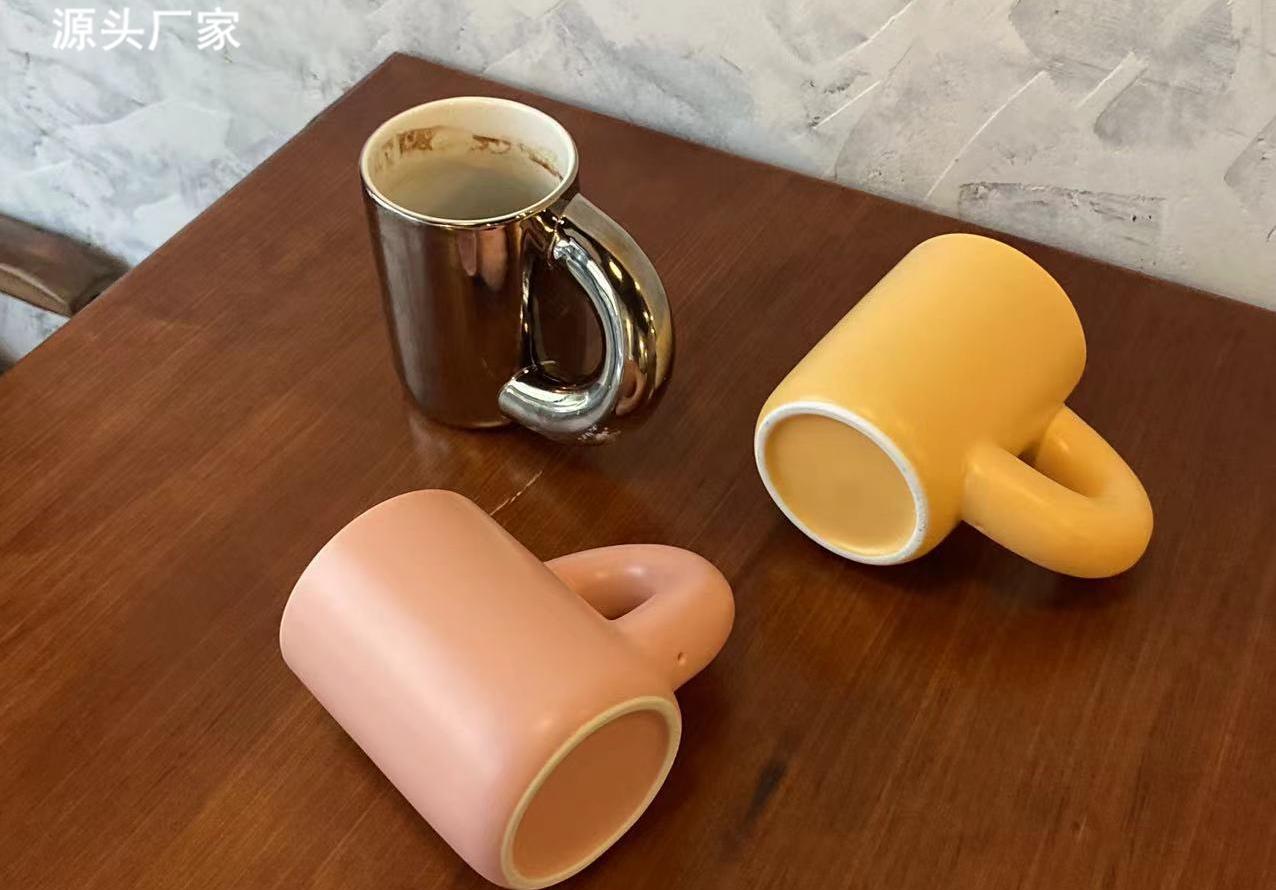
What to do: mix a slurry first, then pour, then wash right away
- Check the glaze first, then the handle and the capacity. A plain, unchipped interior is easier to wash after a starchy drink. If the mug is too small, the slurry and hot water will splash out. A more generous size such as the XL Chubby Ceramic Mug or the ring-handle ceramic mug leaves more room to stir.
- Warm the mug, then mix the powder. Rinse the cup with a little warm water and pour it out, add the starch with a little more warm water and stir until smooth, and only then add hot water. Pouring boiling water straight onto dry powder is the main reason it clumps. For cautions about pouring boiling water into a ceramic mug, see can you pour boiling water into a ceramic mug.
- Pour along the wall and stir as you go. Don’t fill the mug in one pour. When the mixture turns translucent or an even paste, it’s ready to drink. If lumps form, mash them with a spoon; don’t move the mug onto a stove.
- Wash it as soon as you finish. As lotus root starch cools, it leaves a sticky film on the glaze that gets harder to wash the longer you wait. Warm water and a sponge are usually enough; you rarely need a scouring pad. For the dishwasher, see dishwasher-safe ceramic mugs, and don’t put gilded or already-chipped mugs in the machine.
- Don’t leave it overnight, and don’t use the mug as a pan. Don’t keep leftover starch in the cup. An everyday ceramic mug isn’t a saucepan, and it shouldn’t sit on a burner or over an open flame.
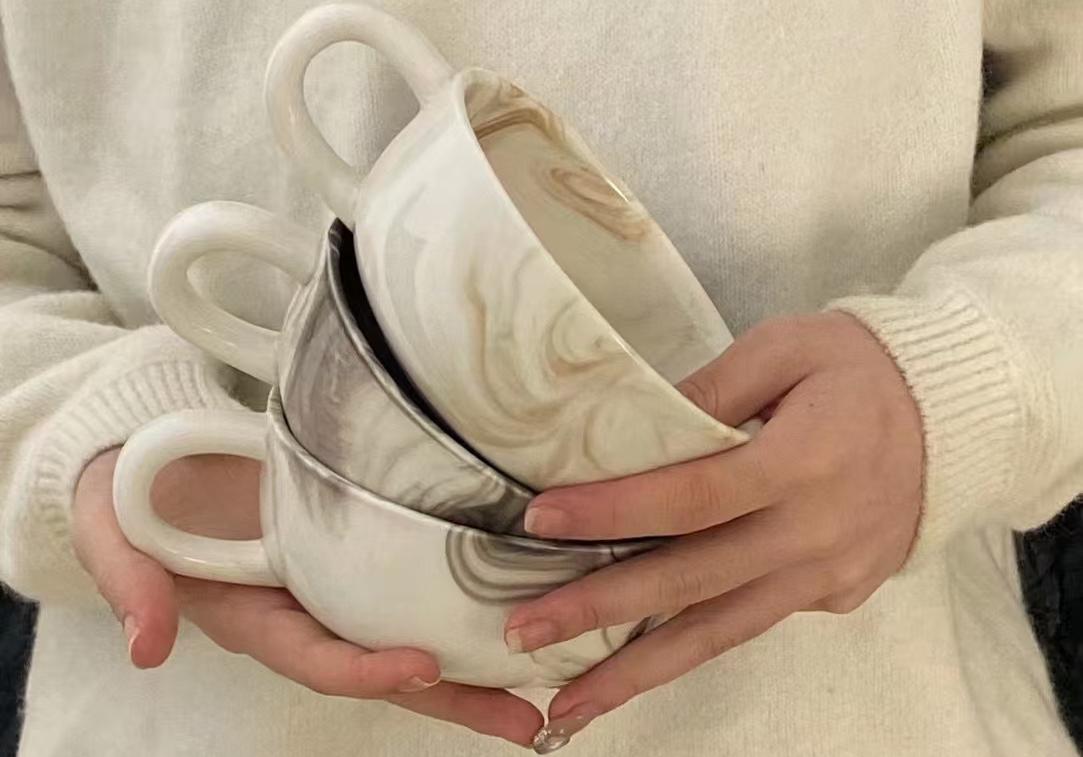
What to avoid
- Pouring hot water straight onto dry powder: it almost always forms lumps, and they stick to the base and are harder to wash.
- Using a gilded, crackle-glaze, or already-chipped mug: the starch paste works into the cracks, and those cups aren’t a good choice for a hot, thick mixture.
- Heating the mug on a stove “to cook it a little more”: a mug isn’t a pot. A sudden heat and an open flame can crack it.
- Leaving leftover starch in the mug overnight: the film hardens, and odors linger more easily.
- Scraping with a metal scouring pad or a harsh powder: that can damage the glaze. A sponge and warm water, while the cup is still warm, are usually enough.
A quiet brand note
To mix lotus root starch in a ceramic mug, you only need an everyday cup with an intact glaze, a handle, a little extra room, and an interior that’s easy to stir and wash. At Boom Cup, start with a roomier XL Chubby Ceramic Mug or an easy-to-hold Chubby Ceramic Mug, then compare shapes in the product list. A coaster is also handy under a hot mug; try the Absorbent Ceramic Coaster.
FAQ
Can you make lotus root starch in a ceramic mug?
Yes. An everyday ceramic mug with an intact glaze, a handle, and enough capacity is fine. Mix the powder with a little warm water first, then stir in hot water, wash the mug as soon as you finish, and don’t boil it on a stove or leave the drink soaking overnight.
Why does lotus root starch clump in a ceramic mug?
Usually because dry powder went straight into very hot water. Stir the starch with a little warm water until it’s smooth, then pour hot water in slowly along the wall while you keep stirring. You’ll get far fewer lumps.
How is this different from making oatmeal or hot cocoa in a ceramic mug?
Oatmeal is about softening flakes; see can you make oatmeal in a ceramic mug. Hot cocoa is more about fat clinging to the wall; see can you make hot cocoa in a ceramic mug. Lotus root starch is a starch: it clumps easily, and it can leave a film as it cools, so the important steps are mixing a slurry first and washing the mug right away.
Can I cook lotus root starch in a ceramic mug on the stove?
No. An everyday ceramic mug isn’t a saucepan, and sitting it on a burner or over a flame can crack it. If you need to heat the mixture, cook it in a pot and pour it into a pre-warmed mug.
How do I wash starch off the mug, and can it go in the dishwasher?
While the mug is still warm, wash the film off with warm water and a sponge; don’t wait until it hardens and then scrape it. Whether it can go in the dishwasher depends on the shape and the decoration; see dishwasher-safe ceramic mugs. Don’t dishwasher gilded or chipped cups.