Answer first: “Can you put alcohol in a ceramic mug?” — an everyday ceramic mug with an intact glaze, and no cracks or peeling, can usually hold wine, beer, or spirits for a short drink; don’t use a mug as a bottle and store alcohol in it. Wine is acidic, so be careful with gold-rim, plated, or overglaze decoration. For beer, check that the mug is large enough, and don’t clamp a lid on and shake. Spirits are only for a short pour—don’t heat a mug of liquor on the stove or in the microwave. Wash it the same day to keep odors from lingering.
Keep the scope clear: alcohol is not the same article as soda, iced drinks, or lemon water
Cola or sparkling water for a short drink—without sealing, shaking, or a long soak—is in can you put soda in a ceramic mug. Ice and thermal shock are in can you put ice in a ceramic mug. Acidic drinks against gold-rim or other decoration are in can you make lemon water in a ceramic mug. Whether the mug itself is a safety concern, and what to do about crazing or odors, are in do ceramic mugs contain lead or cadmium, ceramic mug cracked: what to do, and ceramic mug odor: what to do.
This page is narrower: can an everyday ceramic mug be used for a short pour of alcohol? Formal tasting, aroma, and structure still belong in a proper glass. For a casual pour at home, a sound everyday mug is usually enough. If you need the difference between a coffee cup and a mug, see coffee cup vs mug.

A quick table: how to use a ceramic mug with different drinks
| Situation | A better way to use it | We wouldn’t recommend |
|---|---|---|
| Red or white wine (a short drink) | A plain everyday mug with an intact glaze is fine for a glass you drink now, such as the clean-line ceramic mug | Storing a whole bottle in the mug; using a cracked or chipped mug, or a gold-rim, plated, or overglaze-decorated mug for acidic wine |
| Beer or craft beer (a short drink) | Use a mug with enough capacity and leave a little room for foam; if an everyday mug feels tight, switch to a larger one such as the XL chubby ceramic mug. Capacity notes are in how many milliliters a mug usually holds | Clamping a lid on and shaking, or forcing a whole bottle into a mug that’s too small |
| Spirits such as baijiu or whiskey (a short pour) | Pour a small amount and finish it soon | Heating a mug of spirits on the stove, a ceramic cooktop, or in the microwave to “warm the drink” |
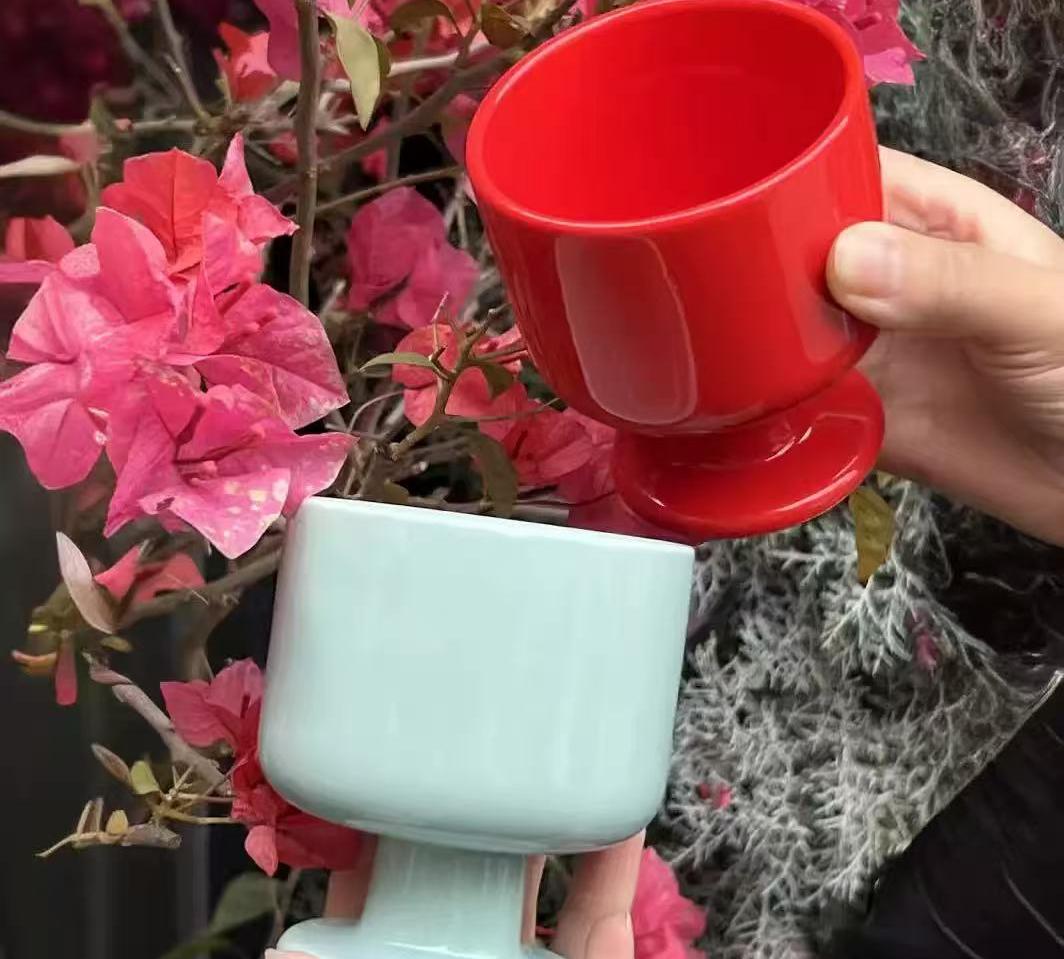
| Champagne or sparkling wine | For a casual sip, a sound everyday mug can hold it; for a more formal occasion, switch to a stemmed ceramic glass such as the vintage ceramic champagne cup set or the Korean ceramic champagne cup set | Sealing, shaking, or using a cracked mug |
| After you finish | Wash it the same day with warm water; lingering smells are covered in ceramic mug odor: what to do | Leaving alcohol to soak overnight, or skipping the wash until the next day |
This table is not a lab test, and it doesn’t give any mug a “lead-free guarantee” or a “food-grade certificate” number. What you can judge is how you use it: the glaze should be intact, you pour and drink, you don’t store alcohol in the mug, and you wash it the same day. Details about the glaze and decoration themselves still belong in do ceramic mugs contain lead or cadmium.
A practical order: check the mug first, then decide what to pour
- Start with the glaze. The inner wall and the rim should be complete, with no cracks, peeling glaze, or chips. Don’t use a mug that’s already crazed or damaged for acidic wine; what crazing looks like is in ceramic mug cracked: what to do.
- Keep gold-rim, plated, and overglaze decoration away from acidic wine. The acidity in wine raises the same kind of concern as lemon water or soda. If the decoration is on the rim or the inner wall, don’t use that mug for red wine. That issue is explained in can you make lemon water in a ceramic mug. A plain mug with an even glaze is the easier default.
- For beer, check capacity, and don’t seal and shake. An ordinary mug is often only enough for a shallow pour. If you want more room, use a larger mug such as the XL chubby ceramic mug or the large-capacity circle-texture mug. A lid can rest loosely to keep dust off; don’t clamp it down and shake. The same point applies to soda—see can you put soda in a ceramic mug.
- Spirits are only for a short pour. Don’t heat them in the mug. An everyday ceramic mug is not a vessel for warming liquor. Don’t set a mug of spirits on the stove or a ceramic cooktop, and don’t put it in the microwave as a “hot drink.” If you need the drink warmed, use proper ware, and stay away from open flame or appliances used the wrong way.
- You can use a different cup for a formal tasting and for a casual pour. At home, a sound everyday mug is enough. If you care about bubbles, aroma, or a more formal setting, switch to a stemmed shape such as the vintage ceramic champagne cup set or the Korean ceramic champagne cup set. An everyday mug is easy to hold and easy to wash. It isn’t a substitute for the aroma structure of a tasting glass.
- Wash it the same day. Odors and stains from alcohol are harder to deal with overnight. Warm water and ordinary washing are usually enough; for a smell that stays, follow ceramic mug odor: what to do.
What to avoid
- Storing alcohol in a mug for a long time. A short drink is fine. Using the mug as a bottle or a decanter overnight is not.
- Pouring red wine into a mug that already has cracks or chips. Acidic liquid finds its way into those gaps more easily. Move that mug to another use, or stop using it.
- Using a gold-rim or plated rim for wine. Decoration doesn’t love acid. If you’re unsure, switch to a plain-glaze mug.
- Clamping a lid on and shaking beer or sparkling wine. It’s more likely to overflow, and it isn’t how an everyday ceramic mug is meant to be used.
- Heating a mug of spirits on the stove or in the microwave. That isn’t a safe way to warm a drink. Don’t do it.
A brief note from Boom Cup
Can you put alcohol in a ceramic mug? For a short drink, it comes down to whether the glaze is intact. Long storage, a sealed shake, and heating spirits are not jobs for an everyday mug. Boom Cup would use a sound, plain everyday mug for a casual pour, switch to a stemmed glass when the occasion is more formal, and wash the mug the same day—without treating the mug as a bottle, and without writing a certificate number you can’t back up into the conclusion.
FAQ
Is it safe to put wine in a ceramic mug?
An everyday mug with an intact glaze, and no cracks or peeling, is generally fine for a glass you drink now. Don’t store wine in it. Skip gold-rim, plated, or overglaze decoration, especially near the rim, for acidic wine. Questions about lead or cadmium in the glaze itself are in do ceramic mugs contain lead or cadmium; this page doesn’t invent test results or certificate numbers.
Can you put beer in a ceramic mug?
Yes, for a short drink, as long as the capacity is enough. An ordinary mug is often only comfortable for a shallow pour; if you want more room, choose a larger mug. Capacity notes are in how many milliliters a mug usually holds. Don’t clamp a lid on and shake.
Can you warm spirits in a ceramic mug on the stove or in the microwave?
No. High-proof spirits in an everyday ceramic mug are only for a short pour. Don’t heat a mug of alcohol on the stove, a ceramic cooktop, or in the microwave. That isn’t what an everyday mug is for, and it can be dangerous.
What if the mug smells after it held alcohol?
Wash it the same day, and don’t leave alcohol sitting in the mug overnight. If a smell remains, clean it the way ceramic mug odor: what to do describes. Don’t try to cover the smell by pouring more alcohol into the same mug.
Do you have to use a champagne glass? Will an everyday mug not do?
For a casual pour, a sound everyday mug is fine. If you care more about bubbles, aroma, or a formal occasion, switch to a stemmed glass, such as the vintage ceramic champagne cup set or the Korean ceramic champagne cup set. The two cups aren’t solving the same problem: one is easy to hold and easy to wash; the other is a better shape for tasting.