Quick answer: Can you put hot milk in a ceramic mug? Yes, in an everyday ceramic mug with an intact glaze, no cracks, and no gold trim, electroplating, or metal coating. Warm the mug first so you don’t hit cold ceramic with very hot milk, wash off the milk film soon after you finish, and don’t leave milk sitting in the mug overnight. If you also want to reheat the milk in a microwave, that’s a separate question: only do it if the mug is marked microwave-safe. Don’t use this page as a substitute for that one.
First: putting hot milk in a mug isn’t the same as pouring boiling water, making lemon water, or microwaving
Hot milk is, first of all, a hot liquid meeting ceramic. The mug should already be at room temperature, or warmed with a little hot water, before you pour along the inner wall. The details are the same as in can you pour boiling water into a ceramic mug. This is not an acid-soak question. For lemon or juice, use can you make lemon water in a ceramic mug, and don’t mix the two drink rules together.
Whether the material is safe, and how lead or cadmium leaching is assessed, is a separate safety question. This page only covers everyday use and cleaning for hot milk. Don’t pour hot milk into a mug that’s already cracked or chipped; see ceramic mug cracked: what to do and ceramic mug chipped: what to do. Wash a new mug before the first use.
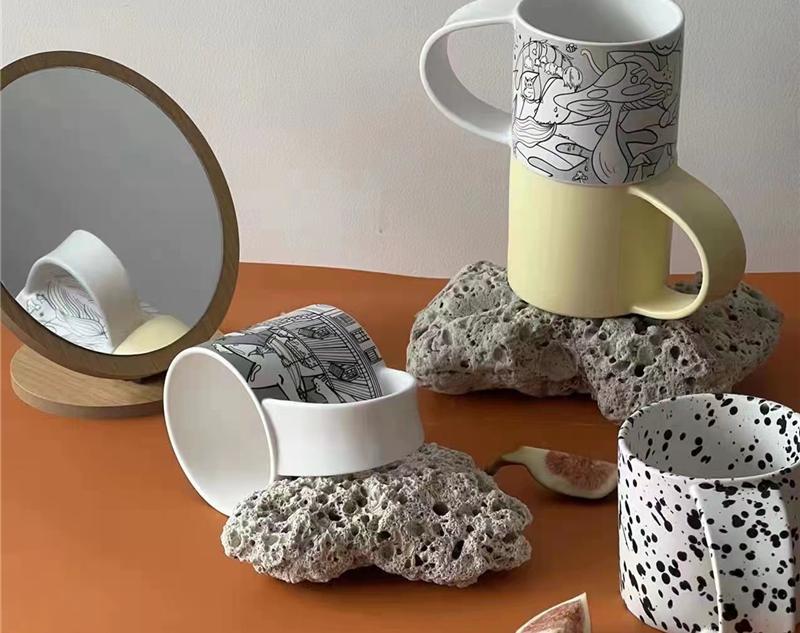
One table: when you can put hot milk in a ceramic mug
| Situation | Advice | Notes |
|---|---|---|
| An everyday ceramic mug with an intact glaze and little decoration, used for freshly heated or already-warm milk, then washed soon after | Usually fine | Don’t pour very hot milk into a cold mug. For the thermal-shock steps, see can you pour boiling water into a ceramic mug |
| A milk film or milk residue left on the inner wall after you drink | Wash it off promptly with warm water and a mild detergent | Milk film isn’t a coffee stain, and it shouldn’t be left to dry on. A gentle stain-cleaning habit is in how to wash coffee stains from mugs; don’t scrub the glaze hard |
| Pouring hot milk into the mug, then putting the mug in the microwave to reheat | Only if the mug is marked microwave-safe | This page does not cover microwave safety. Use microwave-safe ceramic mug. Gold-trimmed or electroplated mugs usually shouldn’t go in the microwave |
| Gold trim, electroplating, a metal coating, or a mug that already has hairline cracks, chips, or flaking glaze | Don’t use it for hot milk, and don’t heat it | Decorative layers are more sensitive to heat and abrasion; a damaged mug should be retired from hot drinks |
| Leaving leftover milk in the mug overnight, or using the mug as a container to store milk in the fridge | Not recommended | Pour leftover milk back into a proper sealed container. Whether a ceramic mug can go in the fridge is a different question; see can ceramic mugs go in the fridge. Don’t collapse “storing milk” and “can the mug be chilled” into one rule |
A plain everyday mug with a sound glaze is usually fine for a cup of hot milk. What you really need to avoid is thermal shock, metallic decoration, a mug that’s already damaged, and leaving milk film or leftover milk in the cup.
What to do: check the mug before you pour, and wash the milk film as soon as you finish
- Look at the glaze and the decoration before you pour hot milk: Hold the rim, the inner wall, and the base to the light and confirm there are no cracks, crazing, or chips. For a simpler everyday choice, start with something lightly decorated, such as the no-logo clean ceramic mug or the rope-texture Nordic mug.
- Warm the mug first, then pour the hot milk along the inner wall: Don’t fill a cold mug with milk that’s just come off the boil. The steps are the same as pouring boiling water; see can you pour boiling water into a ceramic mug. You also don’t need to leave the milk simmering in the mug for a long time.
- Wash off the milk film as soon as you finish; don’t leave it overnight: Warm water and a mild detergent are usually enough. Don’t use a hard brush or a harsh powder to “polish” the glaze. If an odor remains, see ceramic mug odor: what to do. The gentle method for coffee stains can be a reference, but here you’re cleaning milk film, not a caffeine stain; see how to wash coffee stains from mugs.
- If you want a larger breakfast pour, choose a bigger everyday mug: For example the chubby mug or the chubby mug XL. You still need an intact glaze, and you should still wash it promptly. Capacity is a separate choice from whether the mug can hold hot milk.
- Don’t use a gold-trimmed or electroplated mug for hot milk, and don’t microwave it: Pieces such as the Korean platinum-rim mug or the silver electroplated planet mug are safer swapped for a plain-glazed everyday mug. Whether a mug can go in the microwave should always follow microwave-safe ceramic mug and the product’s own care notes.

Pitfalls to skip
- Reading this page as a yes to microwaving milk in the mug: For microwave safety, see microwave-safe ceramic mug. This article only covers whether you can pour hot milk into a ceramic mug, and how to wash the milk film.
- Pouring just-boiled milk into a cold mug: Warm the mug first, then pour along the inner wall. See can you pour boiling water into a ceramic mug.
- Using a gold-trimmed or electroplated mug for hot milk, or heating it: Decorative layers are more sensitive to heat and abrasion.
- Keeping a cracked, crazing, or chipped mug in use for hot milk: Stop using it for hot drinks; see ceramic mug cracked: what to do.
- Leaving leftover milk in the mug overnight, or treating this page as permission to store milk in a mug in the fridge: Pour leftover milk into a sealed container. Whether the mug itself can go in the fridge is covered in can ceramic mugs go in the fridge—those are two different questions.
Soft brand note
For an everyday ceramic mug and a cup of hot milk, what matters is an intact glaze, getting past thermal shock, and washing off the milk film when you’re done. Boom Cup would rather you keep this separate from “can it go in the microwave?” and “can I make lemon water in it?”: choose a lightly decorated mug with a sound glaze, pour as you drink, and wash it when you finish.
FAQ
Can you put hot milk in a ceramic mug?
Yes, in an everyday ceramic mug with an intact glaze and no gold trim or electroplating. Avoid thermal shock, and wash off the milk film promptly. Easier-to-judge everyday options include the no-logo clean ceramic mug and the rope-texture Nordic mug, but you should still follow the product’s own care notes.
Can I pour hot milk straight into a mug I just took out of the cupboard?
We wouldn’t. The mug should already be at room temperature, or warmed with a little hot water, before you pour along the inner wall, so you avoid thermal shock. See can you pour boiling water into a ceramic mug. Don’t pour hot milk into a mug that’s already cracked or chipped.
Can I microwave milk in a ceramic mug?
This page can’t answer that on its own. It depends on whether the mug is marked microwave-safe; see microwave-safe ceramic mug. Gold-trimmed or electroplated pieces such as the Korean platinum-rim mug and the silver electroplated planet mug usually shouldn’t go in the microwave. Use a plain-glazed everyday mug instead.
How do I wash the milk film that forms in a ceramic mug?
Wash it off promptly with warm water and a mild detergent; don’t wait for it to dry and then scrub hard. A gentle stain-cleaning habit is in how to wash coffee stains from mugs, but here the residue is milk film, not a coffee stain. Don’t leave leftover milk in the mug overnight; for lingering smells, see ceramic mug odor: what to do.
Is this the same as lemon water, or a material-safety question?
No. Lemon water is about an acidic soak; see can you make lemon water in a ceramic mug. Lead, cadmium, and laboratory limits are a material-safety question, and this page is not a substitute for that. This article only covers how to pour and wash hot milk, and it shouldn’t be mixed up with microwaving or storing leftover milk overnight.
Wrap-up
Can you put hot milk in a ceramic mug? Yes, if the glaze is intact, you avoid thermal shock, and you wash the milk film promptly. It isn’t the same question as pouring boiling water, making lemon water, or microwaving the mug—pour as you drink, and wash it when you’re done.