Answer first: “Can you put juice in a ceramic mug?” — an everyday ceramic mug with an intact glaze can usually hold orange, apple, or berry juice for a short sitting; skip gold-rimmed, plated, or damaged-glaze cups first, and don’t store juice in the mug. Juice is often acidic, and it may also carry sugar and pulp. That is not the same as making lemon water or pouring soda, which are covered on other pages.
First, separate juice from lemon water and from soda
Lemon water is mainly about acidic steeping and whether to avoid gold or plated rims; see can you make lemon water in a ceramic mug. Soda adds carbonation and the advice not to cap and shake the mug; see can you put soda in a ceramic mug. The point with juice is that it is usually just as acidic, or more so, and it may also have pulp, color, and sugar. Finishing it in a short sitting is fine; leaving it in an open mug is both unhygienic and harder to wash. Background on acidic drinks and lead or cadmium release is in lead and cadmium in ceramic mugs. Don’t reduce this to “all ceramic is fine” or “no ceramic is fine.” This page only answers whether an everyday ceramic mug can be used for juice, and what to watch.

A quick table: juice in a ceramic mug, by situation
| Your situation | A better approach | Better to skip |
|---|---|---|
| An everyday mug with an intact glaze, holding fresh or boxed juice that you’ll finish soon and wash right away | That’s fine. A mug with a smooth rim and an easy-to-wash interior is easier to live with — for example the Clean-Line Ceramic Mug. If you want to pour a little more at once, see the larger XL Chubby Ceramic Mug | Using a cracked, chipped, or peeling mug, or a decorative cup of unclear origin, for acidic juice |
| The mug has a gold or platinum rim, or a silver-plated finish | Switch to a plain everyday mug before you pour juice. A gold rim such as the Korean Platinum-Rim Ceramic Mug, or a plated finish such as the silver-plated ceramic mug, is a poorer match for acid | Leaving orange, lemon, or hawthorn-style juice to sit in a gold-rimmed or plated mug |
| Berry, pomegranate, mango, or other juices that stain easily | A short sitting is still fine, but wash the interior and the rim promptly. A faint shadow on a light glaze is usually easier to remove if you wash it now, not the next day | Setting the mug aside after you pour, then dealing the next day with a sticky, stained wall |
| You want to refrigerate juice in the mug overnight, or use the mug as a “small pitcher” for a day | Wash after you drink, and return leftover juice to its bottle or a sealed food container. A mug is for drinking, not for storing an acidic sweet drink | Leaving juice overnight in an open mug, where sugar and pulp get harder to clean and the drink is more likely to taste off |
| The mug has just been rinsed with hot water, and you’re about to pour iced or refrigerated juice | Let the mug return to room temperature first, then pour the cold drink, so you avoid a sudden temperature swing | Pouring ice-cold juice straight into a hot mug, which is hard on the body and the glaze |
Whether juice belongs in the mug depends on this cup’s glaze and decoration, not on the word “ceramic” itself. What the piece can do, and how durable it is, still follows the actual markings on that mug.
What to do: check the glaze, watch the time, then wash
- First check that the glaze on the interior and the rim is intact. If there is no crack, peeling, or bare patch, and the mug was made as everyday ceramic, it can usually hold juice for a short sitting. For a brand-new mug, you can start with how to wash a new mug for the first time.
- Drink it after you pour; don’t treat the mug as a juice bottle. Pulp and sugar cling to the curve and turn sticky if they sit. A warm-water wash right after you finish is easier than scrubbing the next day.
- Skip gold rims, plated finishes, and decorative overglaze on the interior. Juice is often acidic, and those decorations stand up to long contact less well than a plain everyday glaze.
- Deep-colored berry juices should be washed the same day. A faint shadow on a light glaze is usually leftover pigment and sugar, not a broken mug. If the mug already smells off, start with what to do about ceramic mug odor, and don’t keep using it for juice until that’s handled.
- Don’t reuse the conclusion from lemon water or soda. Lemon water is about steeping and metal rims; soda is about gas and a closed lid. Juice adds pulp, sugar, and possible staining.
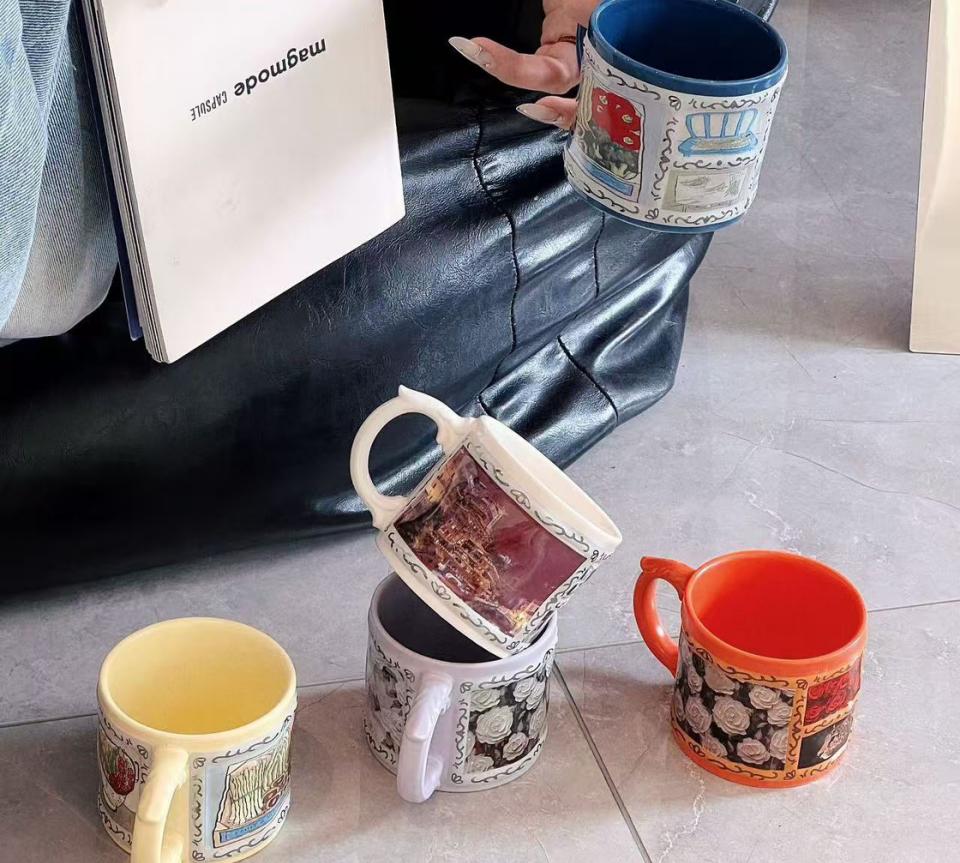
What to avoid
- Leaving juice in the mug overnight: acid, sugar, and pulp all make the wall harder to clean, and that is no longer a short sitting.
- Pouring juice into a mug with bare glaze, a crack, or a decorative cup of unclear origin: acidic drinks need a complete glaze made for everyday use.
- Steeping orange or lemon-style juice in a gold-rimmed or plated mug: metal decoration isn’t meant for long contact with acid.
- Pouring ice-cold juice into a mug that has just been scalded with hot water: the temperature swing is hard on the body and the glaze.
- Treating this page as the same article as lemon water or soda: all three involve acid, but juice also brings pulp, sugar, and staining, so the conclusion shouldn’t be copied across.
A quiet brand note
Whether you can put juice in a ceramic mug doesn’t turn on the word “ceramic.” It turns on whether the glaze is intact, and whether you finish the drink and wash the mug the same day. Boom Cup everyday ceramic mugs are better used as short-sitting drinkware — for example the Clean-Line Ceramic Mug or the larger XL Chubby Ceramic Mug — not as long-term storage for acidic juice.
FAQ
Is juice in a ceramic mug unsafe because it is acidic?
An everyday mug with an intact glaze, made for daily use, can usually hold juice for a short sitting. What you should skip is a bare or cracked glaze, and a decorative cup of unclear origin with a gold rim, a plated finish, or overglaze on the interior. Background on acidic drinks and lead or cadmium is in lead and cadmium in ceramic mugs.
Can you leave juice in a ceramic mug in the fridge overnight?
We wouldn’t leave juice overnight in an open mug. Even if the mug itself can go in the fridge, leftover juice is better back in its bottle or a sealed food container. The “yes” on this page assumes a short sitting, finished and washed the same day.
How is juice in a ceramic mug different from lemon water or soda?
Lemon water is mainly about acidic steeping and metal decoration; see can you make lemon water in a ceramic mug. Soda also means you shouldn’t cap and shake the mug; see can you put soda in a ceramic mug. Juice usually also has sugar and pulp, and some of it stains, so the emphasis is on finishing it soon, washing it right away, and not storing it in the mug.
Will dark berry juice stain a ceramic mug?
A light glaze can sometimes keep a faint shadow. That is usually leftover pigment and sugar, not a damaged mug. A same-day wash with warm water is usually more effective. If it is already sticky or smells off, start with what to do about ceramic mug odor, and you can also use the cleaning approach in how to remove tea stains from a mug — but don’t scrape the glaze with a hard tool.
What kind of mug is better for juice?
An everyday ceramic mug with a smooth rim, an easy-to-wash interior, and an intact glaze is a better choice — for example the Clean-Line Ceramic Mug or the XL Chubby Ceramic Mug. Capacity notes are in how many milliliters a typical mug holds. Gold-rimmed, plated, and heavily decorated interior mugs are a poor match for juice.