Quick answer: Underglaze ceramic mugs win because the color sits under the glaze—more wash- and spoon-resistant, so daily coffee does not leave a blotchy face after months. vs fade-resistant prints and heat transfers? Choose by whether you care more about years of hard use or fast, cheap custom / bold patterns. Fade science belongs in a dedicated care guide; this page focuses on underglaze’s upside and when to skip it.
What underglaze is—in one sentence
Underglaze: color is painted on the clay body, then sealed under a clear glaze and high-fired, so the pattern is locked under a glassy layer. What your spoon and sponge touch is glaze, not bare ink—so:
- Dishwasher cycles and sponge scrubbing are less likely to scrub the art away;
- A metal spoon stirring inside hits glaze, not a surface transfer film;
- Looks often feel warmer and more “ceramic,” less like a plastic sticker.
For wash habits that protect glaze long-term, see dishwasher-safe ceramic mug and ceramic mug care FAQ. This page stays on why underglaze is worth paying a bit more for, not a full fade comparison chart.
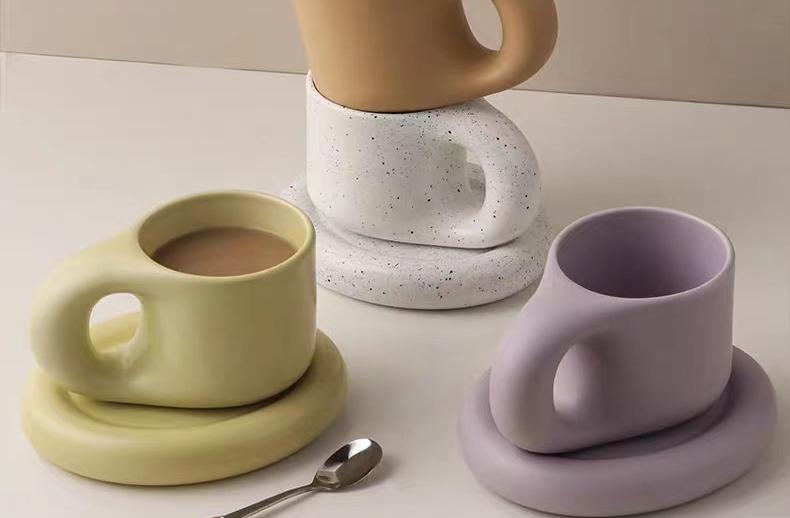
Underglaze vs print vs heat transfer: comparison table
| Process | Where the art sits | Durability feel | Best for | Acceptable trade-off |
|---|---|---|---|---|
| Underglaze | Under the glaze | High: wash- and spoon-tough | Daily main mug, long-term gifts | Usually higher price; photo realism can be limited |
| Quality fade-resistant print / overglaze (depends on kiln) | Often on or above glaze / second fire | Mid–high: kiln and ink system matter | Rich patterns, value picks | Hard scrubbing over years can still wear the surface |
| Heat transfer / common custom prints | Surface transfer layer | Low–mid to mid: coating and use intensity | Fast photo keepsakes, event mugs | Heavy scrubbing or dishwasher can fade or cloud sooner |
“Never fades” is marketing, not physics. Underglaze’s edge is structural; prints and transfers can still look great if you manage expectations for how hard you wash. Stain and wash questions after months of coffee: how to remove coffee tea stains from mugs.
Four reasons underglaze ceramic mugs last
- Daily friction resistance: Spoons, cup brushes, and dishwasher cycles are less likely to leave a “patched” face.
- Hand-feel matches the look: You touch glaze, not a film; visuals stay closer to real ceramic.
- Better long-term gifts: Still looking clean three years later beats “pretty year one, blotchy year two.”
- Contact surface stays glaze: Pattern sealed under glaze means everyday contact is still the glaze layer (always follow the product’s own food-contact notes).
To feel underglaze color blocks and glaze language on ware, see the underglaze salad bowl—same process family. For mugs, confirm the product page says underglaze or high-fire sealed color, then compare patterns. More ceramics: products.
When you do not need to insist on underglaze
- You only need one sharp photo keepsake: Heat transfer / custom print is faster and cheaper; treat it as a memorial piece, not a ten-year main mug.
- Tight budget, try a pattern first: A good print mug is fine—wash gently, skip steel wool.
- Gold trim, plating, heavy relief: Those have their own care rules and are a separate question from underglaze; see dishwasher and care guides rather than mixing topics.
Gentle first washes and ongoing care: ceramic mug care FAQ.
Buying checklist: five underglaze checks
- Does the page clearly say “underglaze” or “high-fire under glaze”? Vague “never fades forever” copy deserves a question mark.
- Look at pattern edges up close: do they melt into the glaze, or look like a floating plastic film?
- Is there print inside the cup? Interior scrub zones stress the process—underglaze’s advantage shows more there.
- Dishwasher OK? Follow the product note; underglaze is usually friendlier, but gold trim and handle decals are separate.
- Gift scene: long-term main mug → underglaze; short memorial → print / transfer is fine.
Soft brand note
Boom Cup prefers “usable every day, pattern still clean three years later” as a mug standard—underglaze is one process option inside that standard, not a slogan of never-fading magic.
FAQ
Why choose underglaze ceramic mugs?
Because the art sits under the glaze: more wash- and spoon-resistant, less likely to blotch with daily use. Great as a main mug or long-term gift; complex photo custom is not always its strength.
Underglaze vs heat transfer—how to pick?
Daily hard use and multi-year looks: prefer underglaze. One photo keepsake, tight budget, need it fast: heat transfer / common custom prints fit better. Browse styles in products.
Does underglaze never fade?
Nothing is absolute. Structurally it lasts longer, but kiln, use intensity, and cleaning still matter. For stains and wash habits, see coffee/tea stain removal and dishwasher-safe ceramic mug.
How can I tell if a mug is really underglaze?
Look for clear underglaze / high-fire sealed wording; check whether the pattern melts into the glaze instead of sitting as a film; ask the shop if unsure. Feel the process language on the underglaze salad bowl as a reference.
How should I wash underglaze ceramic mugs?
Mild soap and a soft sponge are enough; skip steel wool on interior art. Care basics: ceramic mug care FAQ; dishwasher only if the product page allows. More picks: products.
Wrap-up
Underglaze ceramic mug benefits—art under glaze, durability and hand-feel closer to a true daily ceramic. vs prints and heat transfers: main mug and long gifts go underglaze; memorial photos and try-on patterns can stay print/transfer. Keep fade deep-dives in care articles; this page states the value clearly.