Quick answer: Can ceramic mugs go in a disinfection cabinet? Treat an everyday ceramic mug as drinkware: if it isn’t clearly labeled for high-heat sanitizing, the dishwasher, or this kind of cabinet, don’t put it in by default—hand-wash it and let it dry fully. Gold or platinum trim, electroplated finishes, mystery decals, and anything with resin, silicone, or plastic parts—including a lid—should stay out. A home disinfection cabinet (sometimes called a tableware sterilizer cabinet) is a closed box that may use hot drying, infrared, UV, or ozone. That is not the same as a dishwasher, a microwave, or an oven. Below: a comparison table, how to judge, pitfalls, and product links—so you can tell a drinking mug from cabinet tableware.
First: disinfection cabinets, dishwashers, microwaves, and ovens don’t follow the same rules
A home disinfection cabinet is usually a closed cabinet. It may treat dishes with hot drying, infrared, UV light, or ozone. Temperature and cycle time vary a lot by brand and mode, so “it just looks like a drying box” is not enough to decide a mug is safe. A dishwasher is water plus detergent; those rules are in dishwasher-safe ceramic mug. A microwave is for warming the drink inside the cup; see microwave-safe ceramic mug. Being cleared for one of those does not automatically mean the mug can go in a disinfection cabinet.
Ovens and air fryers are sustained dry heat. If an everyday mug isn’t labeled, don’t use it as bakeware; see can ceramic mugs go in the oven and can ceramic mugs go in an air fryer. A disinfection cabinet may not reach baking temperatures, but a high-heat mode, a sudden blast of hot air, or a long drying cycle can still stress the handle, the glaze decoration, and a mug that already has hidden damage. If you already see hairline cracks, crazing, or a chip, don’t run a high-heat or closed-cabinet test; see ceramic mug cracked what to do.
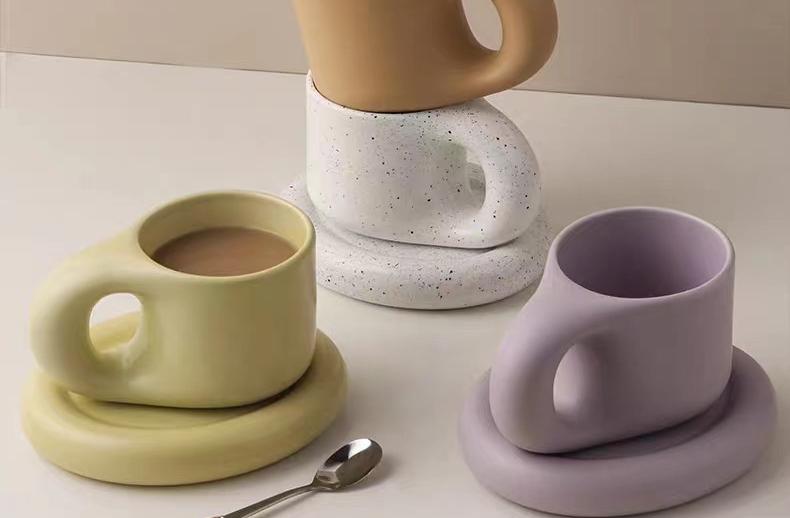
One table: when a ceramic mug should stay out of a disinfection cabinet
| Situation | Suggestion | Why |
|---|---|---|
| The product is clearly labeled for high-heat sanitizing or the dishwasher, with no metal decoration and no plastic or silicone parts | Still check the cabinet’s own manual, and use only a mode that matches the label | Trust this item’s own instructions; don’t assume “other ceramics can go in the cabinet” applies to this mug |
| An ordinary everyday ceramic mug with no relevant label | Don’t put it in a disinfection cabinet by default; hand-wash it and let it dry fully | Treat it as drinkware; if you need sanitizing or drying, check both the mug and the cabinet first |
| Gold or platinum trim, electroplated finishes, metallic paint, or a gilded or platinum rim | Keep it out of the cabinet, and don’t assume the microwave or dishwasher is fine either | Metal decoration is more likely to discolor or peel in heat, damp heat, or repeated drying |
| Mystery decals, or 3D resin / figurine parts | Don’t put it in a disinfection cabinet | Decoration and add-ons usually aren’t designed for cabinet heat or UV |
| A silicone gasket, plastic parts, or a dust lid going in with the mug | Don’t | Lids and gaskets are for everyday dust control, e.g. the universal ceramic dust lid—they are not for the cabinet |
| A wet mug, a mug that just held hot water, or one that already has a crack, crazing, or a chip | Don’t | A wet mug going straight into a hot mode raises thermal-shock risk; a damaged mug should leave hot-drink duty. Crack checks: ceramic mug cracked what to do; chips: ceramic mug chipped what to do |
With no label, the default answer is “this everyday mug does not go in a disinfection cabinet.” Confirm it on the packaging, care notes, or the brand page—not by deciding the glaze “looks sturdy,” and not by extending “bowls and plates can go in” to a handled drinking mug.
If you only need everyday cleaning, how to choose and use the mug
- Keep drinkware and cabinet tableware separate: Use the mug for tea, coffee, and water. The more reliable everyday routine is a gentle hand-wash and drying upside down. Disinfection cabinets are more often meant for bowls, plates, and chopsticks. A mug should go in only when both the mug and the cabinet mode allow it.
- If you want an easier-to-judge everyday mug, choose less decoration: A smooth glaze with little metal trim and few 3D add-ons is usually clearer to care for—for example the no-logo clean ceramic mug and the rope-texture Nordic mug. Even then, consider the cabinet only if the product notes allow it. “Suitable for hot drinks” is not the same as “safe for cabinet sanitizing by default.”
- Treat gold-trim and electroplated mugs as pretty everyday drinkware: For example the Korean platinum-rim mug and the silver electroplated planet mug—keep them out of a disinfection cabinet, and don’t assume they’re microwave- or dishwasher-safe. Dishwasher rules: dishwasher-safe ceramic mug.
- Underglaze is tougher for daily use, not cabinet-safe by default: The value is everyday wear and easier cleaning—see underglaze ceramic mug benefits. That doesn’t mean you can dry it in the cabinet the way you might dry a plate.
- For a new mug, an odor, or mold, fix the cleaning problem first: Odor help is in ceramic mug odor what to do; mold is covered in ceramic mug mold what to do. These cases call for gentle cleaning and thorough drying—not sending a problem mug into a hot cabinet “to bake it out.”

Pitfalls to skip
- Assuming “it holds boiling water,” “it’s dishwasher-safe,” or “it’s microwave-safe” means it can go in a disinfection cabinet: Boiling water, a wash cycle, and a microwave are not the same as hot drying or UV inside a closed cabinet. Judge each use separately.
- Gold trim, electroplated finishes, metallic coatings, or mystery decals in the cabinet: Decoration can discolor or peel, and it adds risk.
- Lids, silicone gaskets, or resin parts going in with the mug: Those pieces aren’t made for cabinet heat or UV. Take them off—and if the mug itself has no label, leave it out too.
- A wet or still-hot mug going into an already heated cabinet: Thermal shock raises the crack risk; see ceramic mug cracked what to do.
- Running a cracked, crazed, or chipped mug through high heat or a closed-cabinet cycle: A damaged mug should leave hot-drink duty, and it especially shouldn’t go in a disinfection cabinet.
Soft brand note
An everyday mug earns its keep when it’s pleasant to drink from, easy to wash, and easy to dry—not when it doubles as cabinet tableware. Boom Cup would rather you follow each product’s own notes: if it isn’t labeled for a disinfection cabinet or high-heat sanitizing, finish everyday care with a hand-wash and a full air-dry.
FAQ
Can ceramic mugs go in a disinfection cabinet?
If an everyday ceramic mug isn’t clearly labeled for high-heat sanitizing, the dishwasher, or a disinfection cabinet, don’t put it in by default—hand-wash it and let it dry fully. Gold or platinum trim, electroplated finishes, mystery decals, and anything with resin, silicone, or plastic parts should stay out. For an easier-to-judge everyday mug, see the no-logo clean ceramic mug and the rope-texture Nordic mug—and still follow that product’s own notes.
If a ceramic mug is dishwasher- or microwave-safe, can it go in a disinfection cabinet?
Not automatically. Dishwashers, microwaves, and disinfection cabinets work differently. Being cleared for one does not mean the mug can go in the cabinet. Dishwasher rules: dishwasher-safe ceramic mug. Microwave checks: microwave-safe ceramic mug. For the cabinet, look for a separate allowance on that product, and match it to the mode in the cabinet manual.
Can a gold-trim or electroplated mug go in a disinfection cabinet?
No. Metal rims, electroplated layers, and metallic paints are a poor fit for cabinet heat or repeated drying, and you often shouldn’t assume the microwave or dishwasher is fine either. These styles are better hand-washed, air-dried, and used at room temperature or gently warm—for example the Korean platinum-rim mug and the silver electroplated planet mug.
What should I check before putting a ceramic mug in a disinfection cabinet?
First confirm the product clearly allows this kind of use. Remove the lid, any silicone gasket, and any non-ceramic parts. The mug should be dry—don’t put a wet mug, or one that just held hot water, into an already heated cabinet. If there’s no label, leave it out. Thermal-shock and crack risk: ceramic mug cracked what to do.
If a mug has no disinfection-cabinet label, how should I clean it day to day?
Prefer a gentle hand-wash and a full air-dry, instead of putting the mug in a disinfection cabinet “to bake it.” For tea residue, see how to remove coffee and tea stains from mugs; for coffee stains, how to wash coffee stains from mugs—don’t scrape hard with a metal pad. If you need dust control, use a lid on the desk only, such as the universal ceramic dust lid.
Wrap-up
Can ceramic mugs go in a disinfection cabinet? For an everyday drinking mug, the default is no unless the product is clearly labeled for it. Hand-wash, dry fully, and keep gold trim, lids, and damaged cups out. Cabinet rules are not the same as dishwasher, microwave, oven, or air-fryer rules.